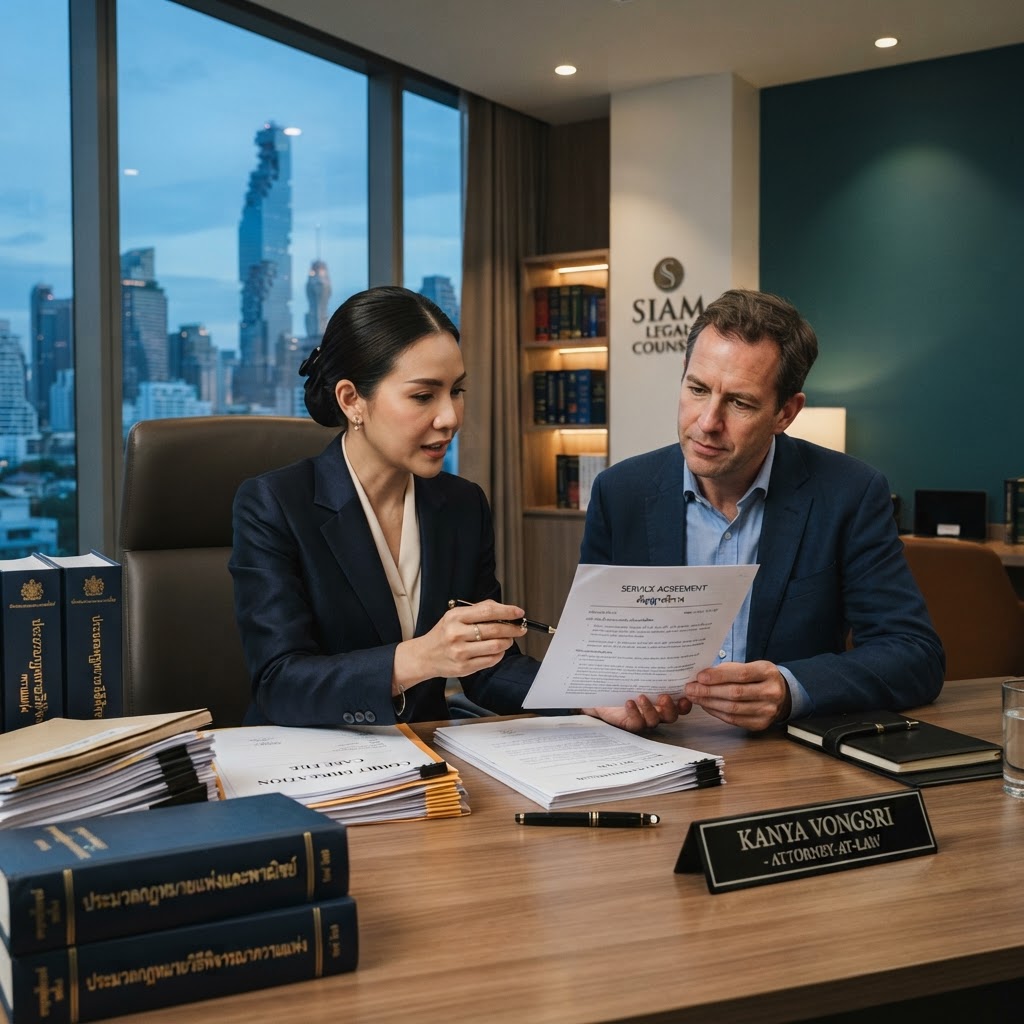
Bangkok is Thailand's main business, commercial and administrative centre, and many foreigners living, working, investing or having family relationships in Thailand may eventually need legal assistance. Legal matters can become particularly challenging for foreigners because Thai laws, court procedures and official documents are generally handled in Thai.
For foreign nationals, choosing an experienced Bangkok lawyer who understands both Thai law and the needs of international clients can be an important step in protecting their rights and avoiding costly procedural mistakes.
Why Do Foreigners Need a Lawyer in Bangkok?
Foreigners in Thailand may encounter legal issues involving:
- Divorce and family disputes
- Child custody and child support
- Marriage registration and prenuptial agreements
- Inheritance and probate
- Criminal accusations and criminal defence
- Civil and commercial disputes
- Debt recovery
- Breach of contract
- Property and condominium transactions
- Land and lease issues
- Company formation and business disputes
- Employment disputes
- Immigration and visa matters
- Notarial and document certification services
- International legal documents and cross-border matters
A lawyer can help explain how Thai law applies to a particular situation, prepare legal documents, communicate with Thai authorities and, where appropriate, represent the client in Thai court proceedings.
Can a Foreigner Hire a Thai Lawyer in Bangkok?
Yes. Foreign nationals can retain a Thai lawyer to provide legal advice and, where legally permitted, represent them in proceedings before Thai courts.
Foreign clients should distinguish between legal advice provided in English and legal representation before a Thai court. Thai court representation must be handled by a properly qualified lawyer authorized to practise in Thailand. Foreign lawyers themselves generally cannot conduct cases as lawyers in Thai courts.
For this reason, foreign clients should verify that the person handling their court case is a properly licensed Thai lawyer.
What Legal Services Can a Bangkok Lawyer Provide to Foreigners?
1. Family Law
Family law is one of the most common areas in which foreign nationals seek Thai legal assistance.
A Bangkok family lawyer may assist with:
- Divorce in Thailand
- International divorce
- Child custody
- Child support
- Parental authority
- Marriage registration
- Prenuptial agreements
- Division of marital property
- Adoption
- Legitimization of children
- International family disputes
Cross-border family cases can be more complicated when the spouses have different nationalities, were married in another country, or have assets and children in different jurisdictions.
2. Criminal Law
Foreigners accused of criminal offences in Thailand should obtain legal advice as soon as possible.
A criminal lawyer may assist with:
- Police investigation
- Arrest and detention matters
- Bail applications
- Criminal complaints
- Criminal defence
- Court representation
- Appeals
- Communication with embassies or consular representatives where appropriate
A foreign national should not assume that procedures in Thailand are the same as those in their home country.
3. Civil Litigation and Dispute Resolution
Foreigners may become involved in civil disputes concerning contracts, money, property, business relationships or personal obligations.
A Thai lawyer may assist with:
- Breach of contract
- Debt recovery
- Compensation claims
- Property disputes
- Construction disputes
- Business disputes
- Settlement negotiations
- Mediation
- Civil litigation
- Enforcement of judgments
In many cases, a lawyer should first assess whether negotiation or settlement may resolve the dispute before commencing litigation.
4. Property and Real Estate
Property transactions involving foreigners require particular attention to Thai law.
Legal assistance may include:
- Condominium purchases
- Lease agreements
- Property due diligence
- Sale and purchase agreements
- Land-related legal issues
- Property disputes
- Review of title documents
- Legal advice concerning foreign ownership restrictions
Foreigners should obtain independent legal advice before transferring substantial funds or signing property-related documents.
5. Business and Corporate Law
Foreign entrepreneurs and investors may require a Bangkok lawyer when establishing or operating a business in Thailand.
Services may include:
- Company formation
- Shareholder agreements
- Commercial contracts
- Employment agreements
- Business disputes
- Corporate compliance
- Foreign investment matters
- Joint ventures
- Contract review
- Legal due diligence
Foreign ownership and business structures can involve specific restrictions and regulatory requirements, so the proposed structure should be reviewed before the business begins operating.
6. Immigration and Visa Matters
Foreign nationals may also require legal assistance with immigration matters, including:
- Visa applications
- Visa extensions
- Work permits
- Immigration compliance
- Overstay issues
- Business visas
- Family-related immigration matters
- Long-term residence issues
Immigration requirements can change, and applicants should confirm the requirements applicable to their specific circumstances before submitting an application.
Why English Communication Is Important
For many foreign clients, understanding the legal advice is just as important as receiving it.
A lawyer serving foreign clients should be able to explain:
- 01What the legal problem isA clear identification of the issue and the parties involved.
- 02What Thai law providesThe relevant legal rules and how they apply to the client's situation.
- 03What options are availableThe legal and practical choices the client may consider.
- 04The potential risksThe risks and consequences associated with each option.
- 05The estimated costsAn indication of the fees and expenses likely to be involved.
- 06The expected procedureThe steps, timelines, and procedural requirements of the matter.
- 07What the client needs to do nextThe actions the client should take to move the matter forward.
English-speaking legal support can therefore help reduce misunderstandings between the client, lawyer, court and government authorities. Bangkok law firms commonly market bilingual or English-language services specifically for international clients.
How Much Does a Bangkok Lawyer Cost?
Legal fees depend on the nature and complexity of the case.
Factors that may affect the fee include:
- Type of legal matter
- Complexity of the dispute
- Number of parties
- Amount of evidence
- Number of court hearings
- Whether the matter is contested
- Translation and interpretation requirements
- Travel outside Bangkok
- Appeals
- Enforcement proceedings
Before instructing a lawyer, foreign clients should ask for a written explanation of the scope of work, professional fees and additional expenses.
How to Choose the Right Bangkok Lawyer
Foreign clients should consider the following:
Check the Lawyer's Qualifications
For court proceedings, confirm that the lawyer is properly licensed and qualified to practise in Thailand.
Choose Relevant Experience
A lawyer experienced in Thai family law may not necessarily be the best choice for a complex corporate dispute. Choose a lawyer whose experience matches the legal issue.
Ask About English Communication
If you are not fluent in Thai, ask whether the lawyer can communicate with you directly in English or whether an interpreter will be required.
Understand the Fee Structure
Ask whether the fee is:
- Hourly
- Fixed
- Based on stages of the case
- A combination of professional fees and expenses
Ask About the Procedure
A good lawyer should be able to explain the expected legal process and identify important deadlines or risks.
Why Bangkok Can Be Important for Foreign Legal Matters
Bangkok is home to many major government departments, courts, commercial institutions and administrative offices. Law firms based in Bangkok therefore commonly assist foreign clients with matters extending beyond the capital, including litigation and transactions in other parts of Thailand.
However, the location of the lawyer is not the only consideration. The lawyer's experience with the particular type of case, court and legal issue should also be considered.
What Should You Prepare Before Meeting a Lawyer?
Before your consultation, prepare:
- Passport copy
- Marriage certificate, if relevant
- Divorce documents, if applicable
- Contracts or agreements
- Property documents
- Court documents
- Police documents
- Correspondence and emails
- Bank records where relevant
- Evidence of payments
- Photographs or other supporting evidence
- A timeline explaining what happened
Providing complete and organized information can help the lawyer assess the matter more efficiently.
Why Choose Nathee Legal Firm for Foreign Clients?
Nathee Legal Firm Co., Ltd. provides legal assistance to foreign nationals in Thailand, including family law, divorce, child custody, inheritance, criminal law, civil litigation, property, business and international legal matters.
The firm provides English-language communication and assists foreign clients in understanding Thai legal procedures and their available legal options. Its website specifically presents services for foreign clients in Thailand and identifies Bangkok as one of its service locations.
For foreign clients who are unfamiliar with the Thai legal system, the objective is not simply to provide legal documents or representation, but to explain the legal process clearly and develop an appropriate strategy for the individual circumstances of each case.
Contact a Bangkok Lawyer for Foreigners
If you are a foreign national living in Bangkok or elsewhere in Thailand and are facing a legal problem, obtaining legal advice early may help you understand your rights, obligations and available options.
Whether your matter concerns divorce, child custody, criminal law, property, business, contracts, inheritance or civil litigation, a qualified Thai lawyer can assess your circumstances and advise you on the appropriate next steps.
Nathee Legal Firm Co., Ltd. — Bangkok Lawyer for Foreigners – Thai Legal Services for International Clients.
Legal advice should always be based on the specific facts and documents of each case. This article provides general information and should not be treated as legal advice for a particular matter.