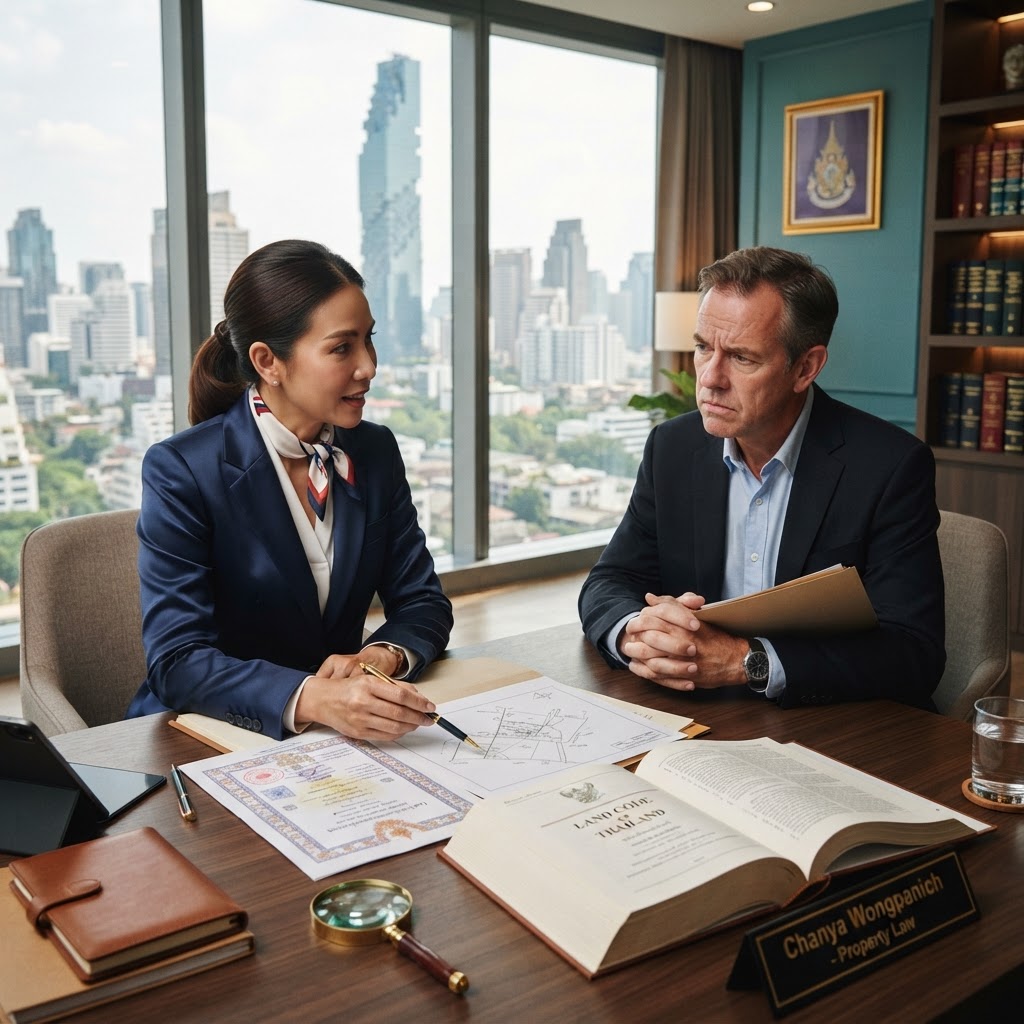
Buying land in Thailand is subject to strict legal restrictions for foreigners. In practice, some foreigners may consider purchasing land using the name of a Thai spouse, partner, friend, relative, or nominee because a foreigner cannot ordinarily register land ownership directly.
However, using a Thai person as the registered owner while the foreigner is the actual purchaser or beneficiary can create significant legal risks. The Department of Lands has specifically implemented measures to prevent and investigate arrangements in which Thai nationals hold land on behalf of foreigners.
1. Can a Foreigner Own Land in Thailand?
As a general rule, foreigners cannot freely own land in Thailand.
There are limited exceptions under Thai law. The Department of Lands identifies, among others, the following situations:
- Acquisition by inheritance as a statutory heir under Section 93 of the Land Code
- Acquisition of up to one rai for residential purposes under Section 96 bis, subject to strict requirements, including an investment of at least THB 40 million and permission from the Minister of the Interior
- Acquisition permitted under other specific laws, such as the Investment Promotion Act
Therefore, simply putting the land in the name of a Thai person does not provide a lawful way for a foreigner to circumvent the restrictions.
2. What Is a Nominee Land Arrangement?
A nominee arrangement generally refers to a situation in which a Thai national appears to be the owner of land, while the land is actually acquired or controlled for the benefit of a foreigner.
For example:
- A foreigner provides the purchase money
- A Thai person is named as the purchaser and registered owner
- The foreigner is the person who actually controls or benefits from the property
- There is an agreement, understanding, or other arrangement that the Thai owner is holding the land on behalf of the foreigner
The Department of Lands expressly recognizes the practice of foreigners using Thai nationals to hold land on their behalf as a form of circumvention that may be subject to investigation.
3. What If the Foreigner Pays for the Land?
Payment of the purchase price by a foreigner does not automatically mean that the transaction is illegal. The surrounding circumstances are important.
However, if the evidence shows that the Thai person is merely a nominee and that the foreigner is the actual beneficiary or controller of the land, the transaction may be investigated as an attempt to circumvent the Land Code.
The Department of Lands has stated that land officials may investigate the parties and request relevant statements and documents when there is reason to believe that a transaction is intended to circumvent the law or acquire land for the benefit of a foreigner.
4. Can a Thai Spouse Buy Land?
Yes. A Thai citizen can generally acquire land in his or her own name.
However, the fact that the Thai purchaser is married to a foreigner does not automatically make every transaction a nominee arrangement.
The key question is whether the Thai spouse is genuinely acquiring the land for his or her own ownership and benefit, or whether the Thai spouse is merely acting as a nominee for the foreign spouse.
The Department of Lands has specific guidance concerning the acquisition of land by a Thai person who has a foreign spouse.
Accordingly, couples should not assume that marriage to a Thai citizen provides a legal mechanism for a foreigner to own Thai land indirectly.
5. What Questions May the Land Office Investigate?
Depending on the circumstances, the Land Office may examine matters such as:
- Who is actually purchasing the property?
- Where did the purchase money come from?
- Who will benefit from the land?
- Who will control the property?
- Whether the Thai purchaser genuinely intends to own the land
- Whether there is an agreement requiring the Thai owner to transfer the land to the foreigner
- Whether documents or statements provided to officials accurately reflect the transaction
The Department of Lands has explained that officials have authority to investigate the parties and request relevant evidence where there is reason to believe that the transaction may circumvent restrictions on foreign land ownership.
6. What Are the Legal Risks for the Thai Nominee?
A Thai person who acquires or holds land as an agent or representative of a foreigner may face liability under Section 113 of the Land Code.
The Department of Lands has specifically stated that a Thai person who holds shares or acquires land as a representative of a foreigner may be subject to both imprisonment and a fine under Section 113.
Depending on the circumstances, additional criminal issues may also arise if false information is provided to government officials or false statements are used to cause false information to be entered into official documents. The Department of Lands has referred to potential liability under Sections 137 and 267 of the Thai Criminal Code in such circumstances.
7. Can the Land Be Forced to Be Sold?
Potentially, yes.
Thai law contains mechanisms for dealing with land acquired in violation of restrictions applicable to foreigners. The Land Code provides procedures concerning the disposition of land that a foreigner is not legally entitled to hold, including circumstances involving ownership on behalf of a foreigner.
The Department of Lands has also published guidance concerning measures for preventing and investigating nominee landholding arrangements.
This means that a foreigner who provides the money for a property but has no lawful registered ownership may face substantial difficulty protecting the investment if the nominee arrangement later becomes disputed.
8. What Happens If the Relationship Breaks Down?
This is one of the most important practical risks.
For example, suppose a foreign husband gives THB 10 million to his Thai wife to purchase land. The wife is the registered owner, but the husband believes the property is effectively his.
If the couple later divorces, the husband may discover that he does not have the same legal position as a registered landowner.
The Department of Lands has published legal guidance concerning cases in which a foreigner provided money for the purchase of land but the Thai person was registered as owner. In such circumstances, the foreigner may not simply receive ownership through a court judgment if the transfer would itself violate the Land Code.
This demonstrates an important point:
A private agreement cannot necessarily give a foreigner an ownership right that Thai land law prohibits.
9. What Should Foreigners Do Instead?
Foreigners who want to acquire property in Thailand should consider lawful alternatives rather than nominee arrangements.
Condominium Ownership
Eligible foreigners may own condominium units subject to the requirements and foreign ownership quota under the Condominium Act.
Long-Term Lease
A properly structured lease can provide a foreigner with lawful rights to use land or property without transferring ownership of the land.
Ownership of Buildings
In appropriate circumstances, ownership of a building may be structured separately from ownership of the underlying land.
Legal Land Acquisition Under Section 96 bis
A qualified foreigner may apply to acquire up to one rai of land for residential purposes under Section 96 bis, subject to the statutory requirements, including the required investment and government approval.
10. Can a Foreign Company or Thai Company Be Used Instead?
Using a company does not automatically solve the problem.
If a company is established or structured merely to circumvent restrictions on foreign land ownership, the arrangement may also be investigated.
The Department of Lands has specifically identified both Thai nominee arrangements and companies established to hold land for foreigners as matters requiring preventive measures and investigation.
A company structure should therefore only be considered where it has a genuine and lawful commercial purpose and complies with Thai corporate, foreign business, and land ownership laws.
11. What If the Foreigner Has Already Used a Thai Person's Name?
If the transaction has already taken place, the parties should obtain legal advice before attempting to transfer, sell, mortgage, or otherwise restructure the property.
The appropriate approach will depend on:
- The identity and nationality of the registered owner
- The source of the purchase funds
- The relationship between the parties
- Any written agreements
- The purpose of acquiring the land
- How the property has been used
- Whether the Land Office has already investigated the transaction
- Whether there is an existing dispute between the parties
Do not create backdated agreements or provide inaccurate information to the Land Office in an attempt to correct an earlier transaction.
12. Key Takeaway
A foreigner should not use a Thai person's name merely as a nominee to acquire land that the foreigner cannot legally own.
The fact that the Thai person is a spouse, partner, friend, relative, or trusted business associate does not by itself make a nominee arrangement lawful.
Thai authorities have specific measures to prevent and investigate the use of Thai nationals as nominees for foreign land ownership. Potential consequences may include criminal liability and measures requiring the land to be disposed of.
Before paying a deposit, signing a land purchase agreement, transferring purchase funds, or registering property in a Thai person's name, foreigners should obtain independent legal advice and have the ownership structure reviewed.
Conclusion
Nominee land arrangements carry serious legal risks for both the foreigner and the Thai national whose name is used. The Department of Lands actively investigates such arrangements, and the consequences can include criminal prosecution and forced disposal of the land.
Foreigners who wish to acquire property in Thailand should use lawful structures — such as condominium ownership, long-term leases, building ownership, or the narrow Section 96 bis exception — and should obtain independent legal advice before proceeding.
Nathee Legal Firm provides legal advice to Thai and foreign clients concerning land ownership, real estate transactions, Thai–foreign marriages, property arrangements, leases, condominium ownership, and disputes involving property in Thailand.
This article provides general legal information and should not be treated as legal advice for a specific case. Land ownership rules and administrative procedures may change and should be verified with the relevant Thai authorities for the particular transaction.