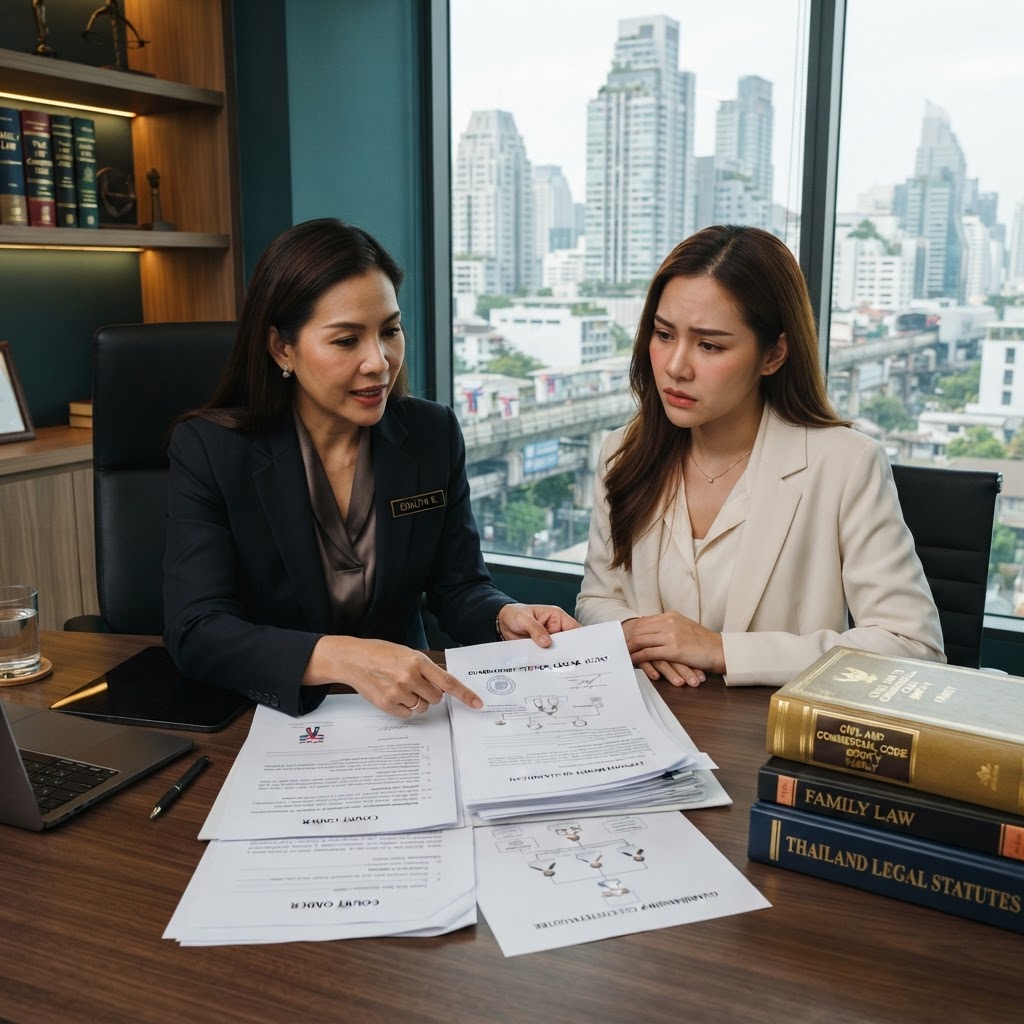
Thai law recognizes several legal statuses involving the care, protection, representation, or management of the affairs of another person. These include legal representative, guardian, custodian, curator, and adoptive parent.
Although these roles may appear similar, they have significantly different legal functions and powers, particularly in matters involving minors, persons adjudged incompetent, quasi-incompetent persons, parental power, property management, legal proceedings, and adoption.
1. What Is a Legal Representative?
A legal representative is a person whom the law authorizes to act on behalf of another person, particularly a minor, or to provide consent where required by law.
Under the Thai Civil and Commercial Code, a minor generally cannot independently perform certain juristic acts without the consent of their legal representative, unless the law provides otherwise.
In general, parents who exercise parental power over their child have an important role as the child's legal representatives.
Example
If a 10-year-old child owns property, certain legal transactions concerning that property may need to be carried out by the child's parents or other authorized person, or may require the legal representative's consent.
However, a legal representative does not necessarily have unrestricted authority to dispose of a minor's property. Certain important transactions may require prior court approval.
2. What Is a Guardian?
A guardian is a person who has responsibility for caring for and protecting a minor in circumstances where the law requires a guardian to be appointed, such as where there is no person exercising parental power in the ordinary manner.
A guardian may have responsibilities concerning:
- The minor's care and upbringing
- Education
- Medical treatment
- Welfare and protection
- Management of the minor's property
- Legal matters concerning the minor
The guardian's powers are not unlimited. In particular, certain transactions involving significant property belonging to the minor may require court approval.
3. What Is a Custodian for a Person Adjudged Incompetent?
Under Thai law, a custodian (ผู้อนุบาล) is a person appointed by the court to take care of a person adjudged incompetent.
When a court orders a person to be legally incompetent, a custodian is appointed to manage the person's affairs and, where permitted by law, act on the person's behalf.
This may apply where a person's physical or mental condition prevents them from managing their own affairs and the statutory requirements for an order of incompetence are satisfied.
Duties of a Custodian
A custodian is responsible for protecting the interests of the person adjudged incompetent, including managing property and affairs in accordance with the law.
Certain transactions involving the property of an incompetent person may require prior court approval. Therefore, appointment as a custodian does not automatically give the custodian unrestricted authority to sell, transfer, mortgage, or otherwise dispose of all property.
4. What Is a Curator?
A curator (ผู้พิทักษ์) is a person appointed by the court to assist and supervise a quasi-incompetent person.
A quasi-incompetent person is different from a person adjudged incompetent. Generally, the quasi-incompetent person remains capable of managing certain aspects of their own life but, because of a physical or mental condition or another legally recognized circumstance, requires assistance or consent for certain legal acts.
Therefore, a curator does not generally have the same authority to act on behalf of the person as a custodian does in relation to a person adjudged incompetent.
For certain transactions, the quasi-incompetent person may be required to obtain the consent of the curator. Failure to obtain the required consent may affect the legal validity or enforceability of the transaction.
5. What Is an Adoptive Parent?
An adoptive parent is a person who legally adopts another person as a child in accordance with Thai adoption law.
Once the adoption has been legally completed, the adoptive parent and adopted child have a legal relationship comparable to that between a parent and child, subject to the provisions and limitations prescribed by law.
Legal consequences may include:
- The duty to provide support and care
- Parental power
- Inheritance rights
- Family-law relationships
- Rights and duties between the adoptive parent and adopted child
Adoption is therefore not merely a private agreement between two individuals. It must comply with the procedures and requirements prescribed by Thai law.
6. What Is the Difference Between a Legal Representative and a Guardian?
The terms legal representative and guardian are related but should not be treated as interchangeable.
| Legal Status | Person Concerned | Main Function |
|---|---|---|
| Legal Representative | Particularly a minor | Acts on behalf of or gives consent for the person as required by law |
| Guardian | A minor in circumstances prescribed by law | Provides care and exercises legal authority as permitted |
| Curator | A quasi-incompetent person | Assists and provides consent for certain legal acts |
| Custodian | A person adjudged incompetent | Manages and protects the person's affairs as permitted by law |
| Adoptive Parent | Adopted child | Establishes a legal parent-child relationship through adoption |
7. Who Has Authority to Manage Property?
Property management is one of the areas requiring particular caution.
Even if a person is a legal representative, guardian, curator, or custodian, this does not necessarily mean that the person can freely conduct every type of property transaction.
Particular caution is required for transactions such as:
- Selling real estate
- Mortgaging property
- Transferring property
- Gifting property
- Entering into a settlement
- Conducting certain legal proceedings
- Entering into transactions that may significantly reduce the property or interests of the person under protection
Depending on the circumstances, the law may impose specific requirements, including the need to obtain prior court approval.
8. If Parents Are Divorced, Who Is the Child's Legal Representative?
When parents are divorced, it is necessary to determine which parent has parental power over the child, based on the divorce agreement, registration, or court order, as applicable.
The fact that a child lives with one parent does not automatically mean that the parent has unrestricted legal authority to make every decision concerning the child.
Disputes may arise concerning:
- Taking the child abroad
- Applying for or renewing a passport
- Medical treatment
- Education
- Management of the child's property
- Changing the child's name or civil registration status
- Commencing legal proceedings on behalf of the child
The relevant parental-power documents and court orders should therefore be reviewed before taking legal action.
9. What If a Guardian or Custodian Abuses Their Authority?
A person responsible for another person's care or property must exercise their authority for the benefit and protection of the person under their care, rather than for personal benefit.
If a guardian, custodian, or other person with legal authority improperly uses the property of a child or protected person, or enters into transactions that cause harm, the matter may give rise to civil or criminal consequences, depending on the circumstances.
It may also be possible to seek court intervention, including supervision or a change of the person responsible for the protected individual's affairs, where permitted by law.
10. Relevant Thai Laws
The principal legislation that may be relevant includes the Thai Civil and Commercial Code, particularly the provisions concerning persons, minors, incompetent persons, quasi-incompetent persons, guardians, curators, and custodians.
Other relevant legislation may include:
- Book 5 of the Thai Civil and Commercial Code concerning family law
- The laws governing adoption
- The Act on the Establishment of and Procedure for Juvenile and Family Courts
- Civil registration laws
- Child protection legislation
- Laws governing the management and protection of property belonging to minors or protected persons
Conclusion
Legal representatives, guardians, curators, custodians, and adoptive parents have different legal statuses and powers under Thai law, even though their roles may involve caring for or protecting another person.
The key differences concern the person being protected, the legal basis for the authority, how the authority is obtained, the scope of the authority, and whether court approval is required.
These distinctions are particularly important in matters involving children, property, inheritance, divorce, parental power, adoption, and legal proceedings.
Before taking legal action or entering into a significant transaction on behalf of another person, it is important to determine who has the legal authority to act and whether court approval is required. Acting without proper authority or beyond the scope of one's authority may affect the validity of a legal transaction and may result in legal liability.
Because the applicable rules depend on the specific circumstances, relevant documents and court orders should be carefully reviewed on a case-by-case basis.
This article provides general legal information and should not be treated as legal advice for a specific case. The applicable legal provisions and procedures should be verified with a qualified Thai lawyer for the particular circumstances.