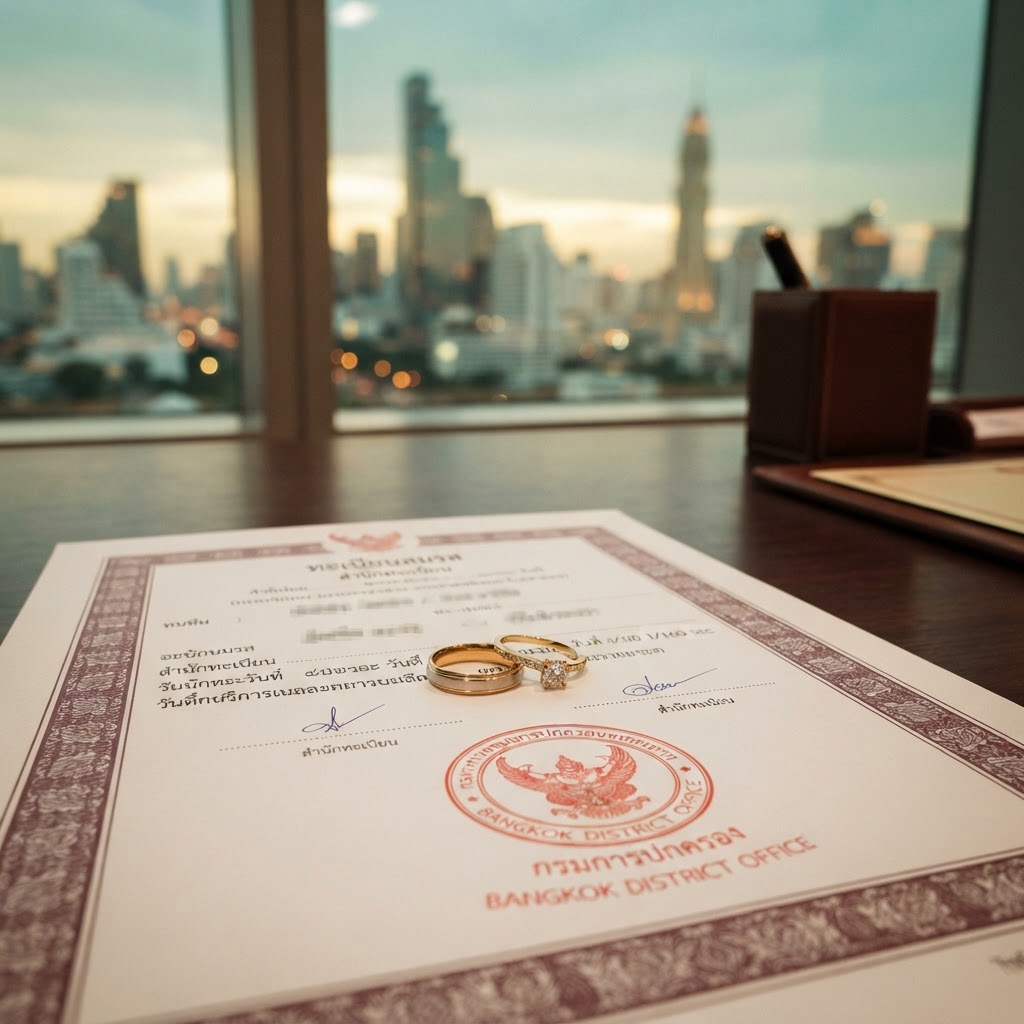
Thailand has recognized same-sex marriage since January 2025, giving same-sex couples substantially the same legal rights and responsibilities as opposite-sex married couples.
For foreign couples, however, registering a marriage in Thailand involves additional documentation and may have important consequences for immigration, property, inheritance, divorce, and family matters.
This guide explains the key legal issues that foreign same-sex couples should understand before registering their marriage in Thailand.
Is Same-Sex Marriage Legal in Thailand?
Yes.
Thailand's Marriage Equality Law amended the Civil and Commercial Code to recognize marriage as a legal partnership between two people rather than specifically between a man and a woman. The law came into effect in January 2025, making Thailand the first country in Southeast Asia to legally recognize same-sex marriage. Same-sex couples can register their marriage through the same civil registration system available to other couples.
The reform replaced gender-specific terminology in Thai family law with gender-neutral terminology and extended important marital rights to same-sex couples.
Can Foreign Same-Sex Couples Get Married in Thailand?
Yes.
Foreign nationals may register a same-sex marriage in Thailand if they satisfy the legal requirements for marriage registration. Foreign couples generally need to provide their passports and evidence of their marital status, such as a certificate confirming that they are legally free to marry. The exact documentation and authentication requirements may depend on the nationality of each person and the relevant authorities.
Foreign couples should therefore check the documentation requirements before visiting a district office because documents issued overseas may need to be authenticated, legalized, translated into Thai, or otherwise certified.
Where Can Foreign Couples Register Their Marriage?
Marriage registration is available through Thailand's civil registration system, including district registration offices. The Thai government has also established procedures for marriage registration through Thai embassies and consulates abroad.
For couples already living in Thailand, the appropriate district office (Amphur or Khet) can generally process the marriage registration. Because documentary requirements can vary depending on nationality and circumstances, couples should confirm the current requirements with the relevant registration authority before attending.
What Legal Rights Do Same-Sex Spouses Have?
The Marriage Equality Law provides same-sex spouses with important rights that were previously unavailable to same-sex couples. These include rights relating to:
- Marriage and divorce
- Property between spouses
- Inheritance
- Adoption
- Management of marital assets
- Certain tax and government benefits
- Legal recognition as spouses
- Certain rights concerning a spouse's estate and property
The Thai government has confirmed that same-sex spouses are entitled to the same marital rights as opposite-sex couples, including adoption and inheritance rights.
Property Rights Between Same-Sex Spouses
Marriage can have significant consequences for property ownership and financial arrangements. Under Thai family law, married couples may have assets that are classified as personal property or marital property depending on when and how the property was acquired.
For foreign couples with significant assets in Thailand, it is important to understand how marriage may affect:
- Real estate
- Condominium ownership
- Bank accounts
- Investments
- Business interests
- Income
- Debts and liabilities
- Assets acquired during the marriage
A marriage registration does not automatically mean that every asset owned by either spouse becomes jointly owned. The legal classification of particular assets should therefore be reviewed based on the circumstances of the couple. See our guides on separate and marital property and marital property division.
Can a Same-Sex Spouse Inherit Property in Thailand?
Yes.
The Marriage Equality Law provides same-sex spouses with inheritance rights equivalent to those available to opposite-sex spouses. This is particularly important for foreign couples who own property, bank accounts, investments, or other assets in Thailand.
However, inheritance can become complicated where the deceased person has assets in several countries. For example, a foreign spouse may have:
- A condominium in Thailand
- Bank accounts in Thailand
- Investments in another country
- Property in their home country
- A will made under foreign law
The applicable law can differ depending on the nature and location of the asset. For this reason, international couples should consider preparing an appropriate estate plan rather than relying solely on the default rules of inheritance.
Can Same-Sex Couples Adopt Children in Thailand?
Yes.
Thailand's marriage equality reforms extend adoption rights to same-sex married couples. The Thai government has specifically confirmed that same-sex couples have the ability to adopt children under the new legal framework.
However, international adoption can involve additional legal requirements. Where one or both spouses are foreign nationals, the couple may need to consider Thai adoption law together with the laws of the relevant foreign country. International adoption should therefore be reviewed on a case-by-case basis before the couple begins the process.
Does Marriage Give a Foreign Spouse the Right to Live in Thailand?
Marriage to another person does not automatically give a foreign national permanent residence or Thai citizenship. However, a legally registered marriage may be relevant to immigration applications and the immigration status available to a foreign spouse.
Foreign nationals should distinguish between:
- 01Marriage registrationThe legal act of registering the marriage.
- 02Immigration statusVisa and permission to stay.
- 03Permanent residenceLong-term residence rights.
- 04Thai citizenshipNaturalization as a Thai national.
These are separate legal matters. A foreign spouse should therefore obtain immigration advice before assuming that marriage itself provides an automatic right to remain in Thailand.
Can a Foreign Same-Sex Couple Get Divorced in Thailand?
Yes.
Same-sex spouses have the right to divorce under the Thai legal framework. Depending on the circumstances, divorce may involve issues such as:
- Division of marital property
- Debts
- Maintenance
- Child custody
- Child support
- International assets
- Recognition of the divorce in another country
For foreign couples, international jurisdiction can be particularly important. A couple may have married in Thailand but have assets, children, or residence connections in another country. In such cases, it is important to determine not only whether the couple can obtain a divorce in Thailand, but also whether the divorce will be recognized and enforceable in the relevant foreign jurisdiction.
What Happens to International Property After Divorce?
This is one of the most important issues for foreign couples.
A Thai divorce does not necessarily give a Thai court unlimited practical control over assets located overseas. For example, a couple may have:
- A condominium in Bangkok
- A house in Europe
- Bank accounts in the United States
- Investments in Singapore
- A business in another jurisdiction
The treatment and enforcement of rights relating to overseas assets may require legal proceedings or recognition in the country where the assets are located. International couples should therefore obtain advice on both Thai law and the law of the relevant foreign jurisdiction where necessary.
Should Foreign Same-Sex Couples Have a Prenuptial Agreement?
A prenuptial agreement can be particularly useful for couples with significant assets, international businesses, or property in different countries. A properly prepared prenuptial agreement may help clarify the financial arrangements between spouses and reduce disputes in the event of divorce or death.
For international couples, the agreement should be carefully reviewed to determine:
- Which country's law applies
- Where the agreement will be enforced
- Whether foreign assets are covered
- Whether the agreement satisfies Thai legal requirements
- Whether it will be recognized in another country
A foreign-language or foreign-law prenuptial agreement should not simply be assumed to be valid or enforceable in Thailand.
What Documents Do Foreigners Need to Register a Same-Sex Marriage in Thailand?
Foreign nationals generally need to present documents establishing their identity and their legal capacity to marry. Typical documents may include:
- Valid passport
- Certificate of marital status or certificate of freedom to marry
- Documents issued by the relevant embassy or authority
- Thai translations where required
- Authentication or legalization of foreign documents where required
- Witnesses
The exact requirements can differ according to the foreigner's nationality and the documents issued by their home country. The Thai government has confirmed that foreign applicants are required to provide passports and single-status documentation from their home country or embassy in Thailand. Because administrative requirements can change, couples should confirm the requirements with the relevant district office or Thai diplomatic mission before making an appointment.
Does Thailand Recognize a Same-Sex Marriage Registered in Another Country?
This is an important question for couples who are already married overseas.
Recognition of a foreign marriage can involve different legal considerations from registering a new marriage in Thailand. The relevant issues may include:
- The law of the country where the marriage was registered
- The nationality of each spouse
- The validity of the marriage
- Thai registration requirements
- Immigration consequences
- Property and inheritance
- Recognition of the marriage by Thai authorities
Foreign couples should obtain specific legal advice before assuming that a foreign marriage certificate automatically produces every legal consequence of a Thai marriage registration.
What About Children Born Through Surrogacy?
Marriage equality and surrogacy are separate legal issues.
A same-sex couple may have questions concerning parentage, assisted reproductive technology, birth registration, and recognition of parental rights. Where a foreign couple is considering surrogacy involving Thailand, they should obtain specialized legal advice before beginning the process.
International surrogacy can involve Thai family law, nationality law, immigration law, birth registration, and the law of the parents' home country.
Why International Couples Should Obtain Legal Advice
Marriage can create significant legal consequences beyond the marriage certificate itself. For foreign same-sex couples, the most important issues may include:
Marriage registration → Immigration → Property → Prenuptial agreement → Inheritance → Children → Divorce → International assets
A couple may therefore benefit from obtaining legal advice before marriage, particularly where one or both spouses are foreign nationals or where the couple owns substantial assets in different countries.
Frequently Asked Questions
Can two foreigners of the same sex marry in Thailand?
Yes. Foreign same-sex couples can register their marriage in Thailand provided they satisfy the applicable legal and documentary requirements.
Can a foreigner marry a Thai person of the same sex?
Yes. Thai law recognizes same-sex marriage, and foreign nationals may register their marriage with a Thai spouse subject to the applicable requirements.
Does same-sex marriage give a foreign spouse Thai citizenship?
No. Marriage does not automatically confer Thai citizenship.
Can same-sex spouses inherit from each other?
Yes. Same-sex spouses have inheritance rights under the marriage equality framework.
Can same-sex married couples adopt children?
Yes. Same-sex couples have legal adoption rights under the marriage equality reforms.
Can same-sex spouses divorce in Thailand?
Yes. Same-sex spouses have the same fundamental right to divorce as other married couples.
Can foreigners register a same-sex marriage at a Thai embassy?
Thai diplomatic missions abroad have procedures for marriage registration, subject to applicable requirements and the circumstances of the couple.
Conclusion
Thailand's Marriage Equality Law represents a major development for international same-sex couples. Since January 2025, same-sex spouses can obtain legal recognition of their marriage and enjoy important rights relating to property, inheritance, adoption, divorce, and other areas of family law.
For foreign couples, however, marriage registration is only the beginning. Immigration status, international property, inheritance planning, prenuptial agreements, children, and recognition of legal rights in other countries can create additional legal issues.
If you are a foreign national planning to marry a same-sex partner in Thailand, or if you are already married and need advice concerning divorce, property, inheritance, child custody, adoption, immigration, or international family law, obtaining advice before taking legal action can help protect your rights and avoid unnecessary complications.